The Art of Ritual Magic
The Lost SymbolThe Art of Ritual Magic is the occult practice through which Mal’akh explains the relationship between human intention, spiritual forces, sacrifice, and power. In his worldview, ritual can open contact with an invisible realm and enlist its inhabitants in earthly affairs. The concept gives his planned transformation a religious and historical frame, but the novel distinguishes his blood-centered doctrine from the symbolic purpose that Robert Langdon assigns to Freemasonry’s initiation rites.
Mal’akh’s system of belief
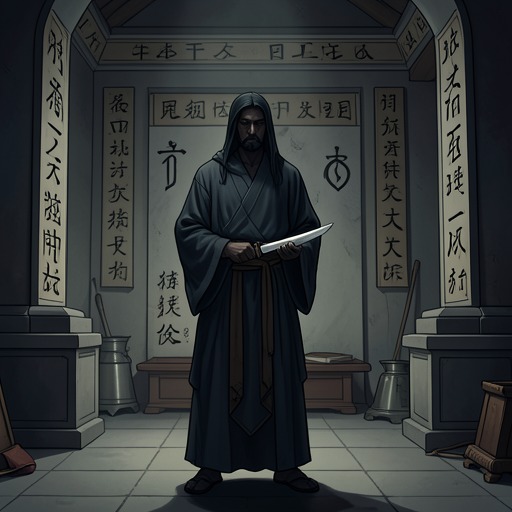
Mal’akh believes that ritual, when correctly performed, can open a portal to a spiritual realm populated by forces of different kinds. He divides these forces into those associated with Light, which heal, protect, and establish order, and those associated with Darkness, which bring destruction and chaos. In this account, the forces are not merely objects of devotion: a practitioner may persuade them to act in the human world and thereby acquire power that appears supernatural.
The exchange depends on offerings. Mal’akh’s scheme assigns prayer and praise to the forces of Light, while he associates the forces of Darkness with blood sacrifice. He treats sacrifice as a measure of power: the greater the offering, the more power he believes can be transferred. He says that he began with animals and gradually chose more consequential sacrifices. By the night of the events at the House of the Temple, he regards himself as approaching the final step of his practice. These are Mal’akh’s convictions and intentions, not a neutral account of supernatural events independently established by the narrative.
His interpretation makes the Art both a technique and a theory of history. Mal’akh imagines that ritual practitioners can change their place in the world by gaining access to forces beyond ordinary human life. His ambition is not simply to perform a ceremony but to complete a transformation and emerge with authority in the spiritual conflict he believes is unfolding. The language of ritual thus supplies a rationale for his actions and a scale on which he measures their significance.
A history of knowledge and corruption
Mal’akh places the Art’s origins in ancient Egypt. He imagines an early era in which adepts mastered it, became more than ordinary practitioners, and established temples of initiation where people traveled to receive wisdom. He characterizes this period as a golden age in which humanity seemed capable of rising beyond its earthly limitations. The Art, in this idealized history, once offered knowledge directed toward human development.
In Mal’akh’s account, that history turns when practitioners become arrogant, hateful, impatient, and greedy. Some corrupt the Art and redirect its power toward personal gain. Their practice, he believes, is more immediate and intoxicating than the earlier pursuit of wisdom, but it also brings destructive forces into the world. The adepts who see this misuse conceal their knowledge from those they consider unworthy. The result, in his narrative, is a loss of access to the original wisdom and a continuing struggle between illumination and darkness.
This account allows Mal’akh to cast himself as heir to a dangerous tradition, but it also exposes the self-serving structure of his belief. He treats the concealed past as evidence that he has recovered a power others have forgotten, while describing his own use of the Art as a continuation of its darker, corrupted form. The tradition’s secrecy becomes, in his hands, both a claim to special knowledge and a justification for acting beyond ordinary moral limits.
Traces in religious practice
Mal’akh argues that remnants of the ancient Art persist across religious traditions, even where their practitioners no longer recognize their supposed origins. He points to mystical practices associated with Kabbalists and Sufis, as well as Christian ritual: Communion, sacred calendars, consecrated clothing, chanting, the use of incense and bells, holy water, and exorcism. He reads these practices not as isolated customs but as surviving echoes of an older system of ritual knowledge.
His most pointed example is the Egyptian obelisk at the center of St. Peter’s Square in Vatican City. Mal’akh treats its presence at the heart of a major Christian site as a sign that Christianity carries symbols inherited from the Ancient Mysteries. He also interprets Christianity’s focus on the sacrificed figure of Jesus as evidence that it understands sacrifice’s transformative force. In his view, however, personal acts such as fasting, renunciation, or tithing do not meet the requirements of genuine sacrifice; he reserves that status for blood offerings.
The distinction matters because the novel presents this reading as Mal’akh’s ideology, not as an authoritative explanation of the religions he discusses. His broad historical claims turn familiar ritual objects and practices into pieces of a single hidden system. The interpretation gives his intended actions a sense of inherited purpose, while its insistence on sacrifice reveals how he has bent the idea of transformation toward violence.
Initiation, symbolism, and competing meanings
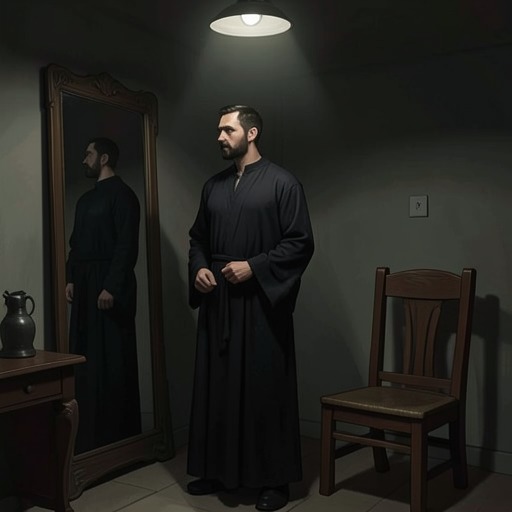
The opening initiation at the House of the Temple provides a concrete counterpart to Mal’akh’s private doctrine. A candidate in Masonic regalia faces an oath ceremony in the Temple Room, amid witnesses and symbols associated with death and renewal. The ritual includes a skull holding wine and a pledge to uphold the oath. Later, a recording reveals the initiate as Mal’akh and shows stages of Masonic initiation, linking his passage through the brotherhood to his secret intentions.
For Langdon, the ritual’s threatening language and death imagery do not make it literal magic. He understands Masonic initiation as symbolic instruction: an encounter with mortality intended to awaken a person to the importance of living honorably and serving others. Its symbols and vows are designed, in his interpretation, to make the initiate’s moral obligations memorable. The distinction between a ritual’s appearance and its meaning becomes especially important when Mal’akh’s recording selects unsettling moments and influential attendees while omitting what Langdon regards as the ceremony’s nobler context. Presented in that way, a symbolic rite can be made to look like evidence of a sinister organization.
The Art of Ritual Magic therefore stands beside, but is not interchangeable with, Freemasonry. Mal’akh takes ritual, secrecy, death imagery, and transformation as parts of his occult project; Langdon reads Masonic ritual as allegorical and ethical. The difference is not merely a dispute about symbols. It separates a practice that Mal’akh uses to rationalize sacrifice and domination from a communal initiation that Langdon understands as a lesson in mortality, integrity, and service. By setting those interpretations against one another, the novel makes the meaning of ritual depend on its framing, its purpose, and the consequences attached to its use.